
Wrexham Face Cardiff In EFL Cup, England’s Knockout Tournament Featuring All 92 Professional Clubs
The EFL Cup Round Four Draw has been made, and the fixtures will take place in the week of October 27. For many football fans, especially beginners, it can be confusing to understand what this competition is, which teams are involved, and why it matters. Let’s walk through the details step by step, starting with the current matchups, the leagues each team plays in, and then dive into the history and significance of this long-running English football tournament.
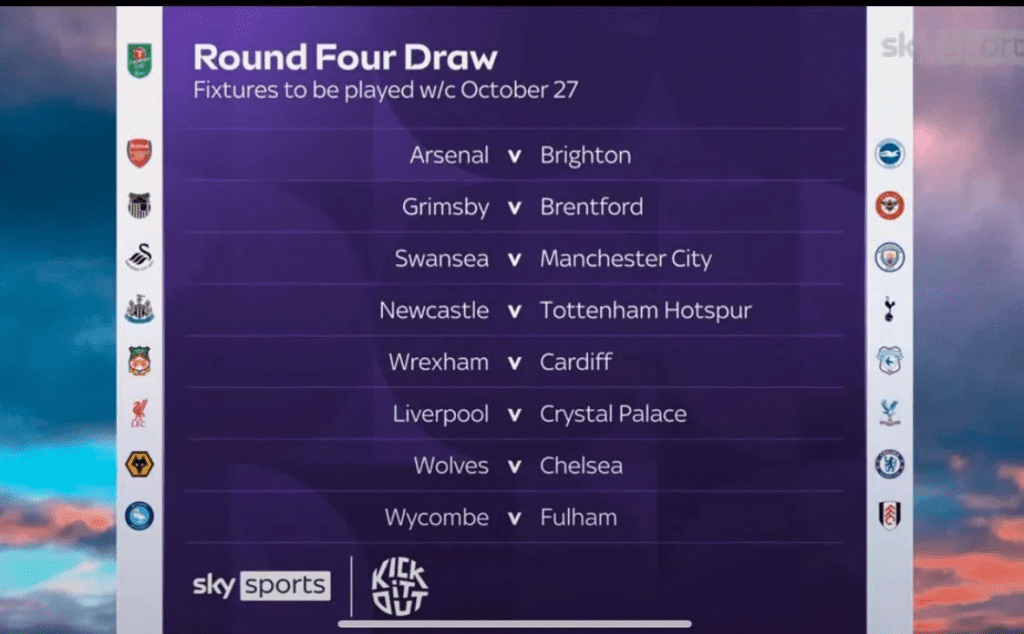
The Round Four Fixtures and Which Leagues the Teams Are In
There are 16 teams left in the 2025–26 EFL Cup, making this the “last 16” stage of the competition. These ties will decide who advances to the quarterfinals. Here are the fixtures, along with the league each club belongs to in the English football system:
- Arsenal (Premier League, Tier 1) vs Brighton (Premier League, Tier 1)
- Grimsby Town (League Two, Tier 4) vs Brentford (Premier League, Tier 1)
- Swansea City (Championship, Tier 2) vs Manchester City (Premier League, Tier 1)
- Newcastle United (Premier League, Tier 1) vs Tottenham Hotspur (Premier League, Tier 1)
- Wrexham (Championship, Tier 2) vs Cardiff City (League One, Tier 3)
- Liverpool (Premier League, Tier 1) vs Crystal Palace (Premier League, Tier 1)
- Wolverhampton Wanderers, known as Wolves (Premier League, Tier 1) vs Chelsea (Premier League, Tier 1)
- Wycombe Wanderers (League One, Tier 3) vs Fulham (Premier League, Tier 1)
This list shows the unique nature of the EFL Cup. Clubs from all four professional leagues in England are still in the running, ranging from giants like Manchester City, Arsenal, and Liverpool, to smaller clubs such as Grimsby Town and Wycombe Wanderers. For fans of lower-league teams, this cup offers a rare opportunity to face elite Premier League opponents.
A Quick Explanation of the League System
To understand why these matchups are so exciting, it helps to know how the English football pyramid works. At the top sits the Premier League, which contains the 20 best clubs in the country. Below it are three leagues organized by the English Football League (EFL):
- Championship (24 clubs, 2nd tier)
- League One (24 clubs, 3rd tier)
- League Two (24 clubs, 4th tier)
Promotion and relegation link these tiers, meaning teams can climb the ladder by winning or drop down by finishing near the bottom. The EFL Cup is special because it is the only knockout competition that guarantees participation from all 92 clubs across these four professional divisions. That’s why you’ll see games like Grimsby Town (League Two) against Brentford (Premier League). On paper, the gulf in resources and talent is huge, but the knockout nature of the tournament means upsets always remain possible.
What Exactly Is the EFL Cup?
The EFL Cup, also known by its sponsorship name the Carabao Cup, is one of England’s major domestic cup competitions. It was founded in 1960 by the Football League as a way to give clubs more games, boost revenue, and provide another route to silverware. Unlike the FA Cup, which involves hundreds of teams including small non-league sides, the EFL Cup is restricted to the 92 professional clubs in the top four tiers. This keeps it slightly smaller and more manageable, but still fiercely competitive.
The format is straightforward: single-leg knockout ties, with extra time and penalties if needed, all the way until the semifinals, which are traditionally played over two legs (home and away). The final is a one-off match held at Wembley Stadium in London, usually in late February. The winner not only lifts the trophy but also earns a place in European competition, specifically the UEFA Europa Conference League, unless they’ve already qualified for Europe through their league position.
A Short History of the Competition
The EFL Cup began in the 1960–61 season, with Aston Villa being crowned its first ever champions. Initially, it was met with skepticism from some clubs who didn’t want more fixtures on top of already busy schedules. However, over time it established itself as a staple of the English season.
Liverpool are the most successful club in EFL Cup history, with nine titles. Manchester City aren’t far behind, thanks to their dominance in the 2010s and early 2020s, when they won the competition six times between 2014 and 2021. Other famous winners include Manchester United, Chelsea, and Tottenham, though the trophy has also produced shock finalists and winners, such as Swansea City in 2013 and Birmingham City in 2011.
One of the most unique aspects of the EFL Cup is the way it has allowed smaller clubs to shine. For example, Bradford City, who were in League Two at the time, made the final in 2013. Even though they lost heavily to Swansea, their run was celebrated as a triumph of the underdog spirit.
The Cup’s Role in Modern Football
Some critics argue that the EFL Cup is less important today, especially for top Premier League clubs who have European fixtures and prioritize the league. Managers often rotate squads, giving younger players or fringe members of the team valuable minutes. However, it still carries weight for several reasons:
- Winning a trophy in February can give a club momentum for the rest of the season.
- It provides a realistic chance of silverware for clubs outside the “big six.”
- It gives smaller clubs opportunities for financial windfalls from hosting or traveling to big grounds.
- Fans enjoy the spectacle of knockout football, where anything can happen.
Even for giants like Manchester City or Liverpool, the EFL Cup can serve as a springboard to bigger success. Pep Guardiola often emphasized the value of winning this competition as a way to build a “winning habit.”
The Current Season’s Narrative
Looking at the 2025–26 draw, several fascinating storylines stand out. Grimsby Town, a League Two side, will relish their tie against Brentford. Wrexham, the Welsh club that has gained international fame thanks to Hollywood ownership, face local rivals Cardiff City in what promises to be a fiery Welsh derby. For neutral fans, matches like Newcastle vs Tottenham or Wolves vs Chelsea pit major Premier League clubs against each other, while Arsenal vs Brighton could be one of the most evenly matched ties of the round.
These 16 clubs reflect the full breadth of English football: from the world-class talent of Manchester City and Liverpool to the hard-working squads of Wycombe and Grimsby. No matter who lifts the trophy at Wembley, the EFL Cup continues to embody the drama and unpredictability that make English football beloved around the world.
Final Words
The EFL Cup is a knockout tournament featuring all 92 clubs from England’s top four leagues, making it one of the most inclusive competitions in football. Currently, 16 teams remain, ranging from Premier League giants like Manchester City and Arsenal to lower-league fighters like Grimsby Town and Wycombe Wanderers. The cup’s history stretches back to 1960, with Liverpool holding the record for most wins and Manchester City enjoying recent dominance. While some top clubs see it as a chance to rotate their squads, the EFL Cup remains an important and exciting part of the football calendar, giving fans upsets, derbies, and memorable Wembley finals year after year.